
In a world where cyberattacks are multiplying and personal data breaches regularly make headlines, protecting one’s online information has become a major concern. Every click can potentially expose sensitive data to malicious actors. Whether for an individual user or a business, adopting best cybersecurity practices is no longer an option but a necessity. From strong passwords to two-factor authentication, along with constant vigilance against phishing and malware, there are several strategies to implement for effectively securing one’s online data.
Best Practices for Securing Your Online Data
Data protection refers to the process of securing essential and sensitive information against compromise or loss. It is a set of practices aimed at ensuring the security of personal data online. Consider implementing complex passwords, regularly updating systems and software, and being cautious with unknown links and attachments. Preserve your digital space as you would your home, with rigor and attention.
As for IT data security, it is essential for protecting a business’s financial information and customer databases. Trade secrets, strategic information, everything that constitutes the living core of the business must be surrounded by an unyielding virtual wall. To achieve this, companies deploy cutting-edge solutions such as advanced firewalls, intrusion detection systems, and robust encryption protocols.
Developing and implementing a consistent data security policy is crucial. This policy defines the responsibilities of each employee regarding data security. It is the backbone of a company’s security strategy, ensuring that all members of the organization understand and adhere to the established procedures and protocols for data protection. Crafting this policy requires a deep understanding of the specific risks the business faces and a rigorous assessment of industry best practices.
Employee awareness is another fundamental pillar. By training employees on the risks associated with data security and the practices to adopt to prevent them, human errors are minimized and the risks of data breaches are reduced. Training sessions should be regular and include practical scenarios to reinforce good habits. Let’s not forget that the security chain is only as strong as its weakest link. Every employee must be vigilant and aware of their role in preserving the company’s data security, my Securitas space.
Tools and Technological Solutions at Your Disposal
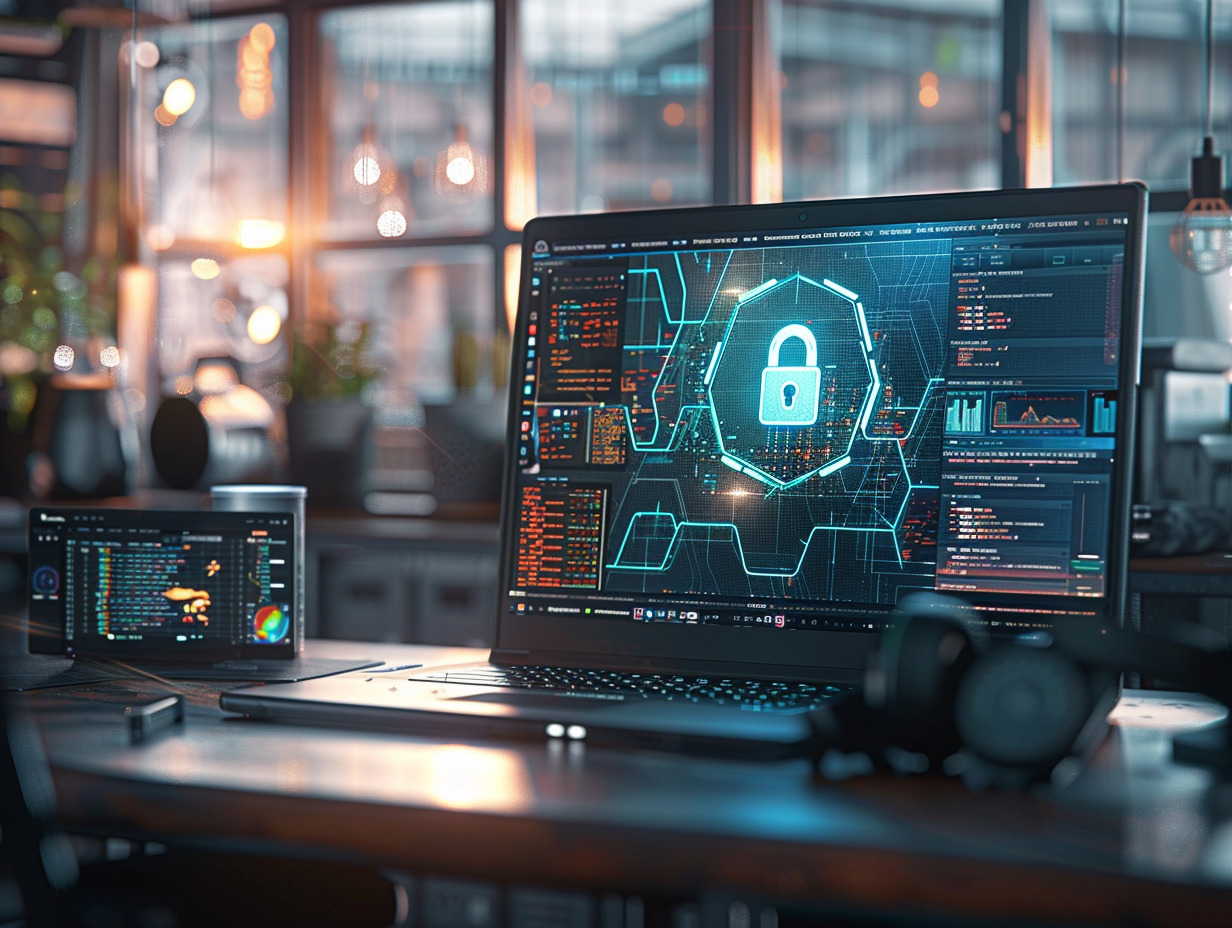
At the heart of data security lies a range of tools and technological solutions. The firewall stands on the front lines, diligently monitoring data flows between a company’s network and the vastness of the Internet. This electronic sentinel is tasked with blocking unauthorized connections and restricting access to the organization’s sensitive resources. Its presence is a bulwark against external threats, a guarantee that data flows according to the strict rules established by network administrators.
Beyond the firewall, antivirus software serves as another layer of defense. This software is designed to detect and neutralize malware attempting to infiltrate computer systems. It functions like an immune system for the network, identifying and eliminating viruses and other forms of malware that threaten data integrity. An effective and regularly updated antivirus is essential for maintaining a healthy and secure computing environment.
These technological solutions, firewalls and antivirus software, are just the visible part of the security arsenal deployed to protect data. They work in concert with other mechanisms and policies, such as access management and data encryption, to create a coherent and effective IT security infrastructure. Access management ensures that only authorized individuals have access to sensitive data, while encryption protects information during storage or transmission. These measures, designed to meet standards such as GDPR, are additional locks on the digital door behind which valuable data resides.