Preparing delicious, easy recipes for the whole family every evening raises a question that rarely gets asked: should you cook one dish that suits everyone, or make several different meals to satisfy every palate? The answer lies somewhere in between, with a shared base and customizable toppings.
France’s public health agency, Santé publique France, notes that fruit and vegetables can be eaten fresh, frozen or canned, expanding your options without making grocery shopping more complicated. This article looks at what really works day to day, comparing family meal formats based on preparation time, cost and how well they bring young and old together.
Family meals: comparing everyday cooking formats
Not all meal formats are equally effective when you’re trying to balance speed, budget and everyone’s satisfaction. The table below compares three common approaches.
| Format | Preparation time | Adaptability to different tastes | Relative cost |
|---|---|---|---|
| One set dish for everyone (bake, casserole) | Medium (30-45 min) | Low: one flavor, no choice | Low |
| Different dishes for everyone | High (1 h+) | Maximum, but exhausting | High |
| Shared base + toppings to choose from | Medium (25-40 min) | High: everyone customizes their own | Moderate |
The “shared base + toppings” format stands out as the best compromise. Cook one main ingredient, put a selection of sides in the middle of the table, and let everyone build their own plate. This works just as well with a bowl of rice as it does with tortillas, pasta or couscous.
Recipes suited to this format are easy to find at mesgourmandises.com, where family meals are designed to be customized in this way.
Shared bases and customizable toppings: family recipes that solve the picky-eater problem
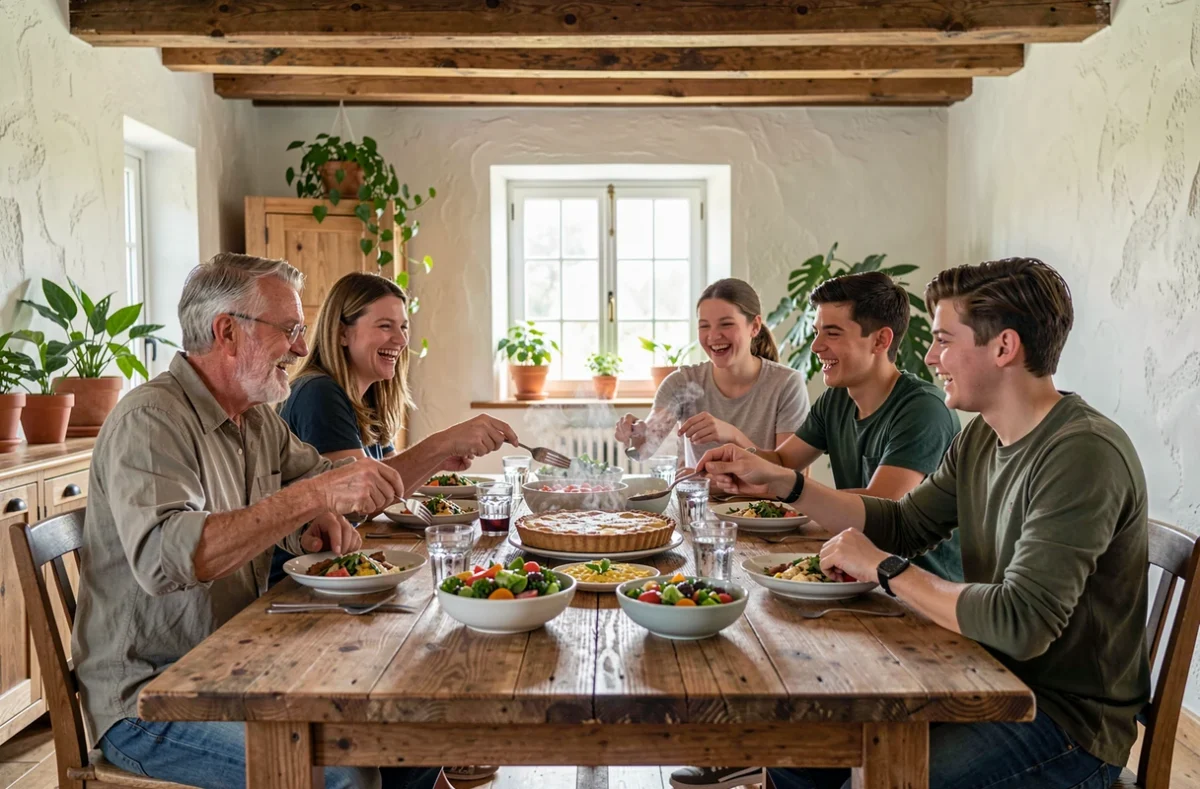
The idea is simple: prepare a neutral or crowd-pleasing base, then offer a selection of toppings for everyone to help themselves to. Children who refuse one vegetable can choose another, without a parent having to cook three separate dinners.
Build-your-own rice bowls
Cook rice (brown or basmati). Arrange separate bowls of sliced stir-fried chicken, corn, diced cucumber, grated carrots, soy sauce and grated cheese. Everyone in the family builds a bowl to suit their tastes. Younger children can skip the soy sauce, while older ones can add chili.
Build-your-own tortillas
Prepare a base of ground meat sautéed with onions, or a mixture of kidney beans for a vegetarian version. Set out lettuce, tomatoes, sour cream, cheese and avocado. One cooking session, several different plates.
Pasta with three sauces to choose from
Cook one type of pasta. Offer homemade tomato sauce, a drizzle of olive oil with Parmesan, and pesto. Children who only eat pasta with butter are covered, as are adults who want pesto. No arguments, no waste.
Legumes and plain frozen vegetables: two underrated allies for quick family meals
France’s National Nutrition and Health Program (PNNS) recommends eating legumes regularly. Lentils, chickpeas and dried beans work well in simple family recipes and are often more affordable than animal proteins.
- A red lentil curry with rice cooked separately takes less than 30 minutes and makes an ideal base for the toppings format (fresh cilantro, yogurt, naan)
- Chickpea couscous lets you serve the couscous, vegetables and meat separately, so everyone can choose their own portions
- A kidney bean and corn salad served with tortillas makes a complete meal on summer evenings
Plain frozen vegetables cut down on prep time without any significant loss of nutritional value. Santé publique France considers them equivalent to fresh produce in its dietary guidelines. A bag of frozen broccoli cooks in five minutes and saves you the trouble of peeling.
A common mistake is to buy prepared frozen meals instead of unprocessed frozen vegetables. The difference in ingredients (salt, fat and additives) is significant.
Family batch cooking: prepare a week of meals with the kids
Batch cooking doesn’t have to be a Sunday chore. A TF1 report shows that involving children in menu planning helps them discover seasonal produce and makes them more willing to try what they’ve prepared themselves.
In practice, a two-hour weekend session can cover most of the week’s dinners. Here’s an efficient plan:
- Choose three bases for the week (rice, pasta, couscous) and cook them in large quantities
- Prepare two different sauces and store them in jars (homemade tomato sauce, mild curry sauce)
- Chop and blanch the vegetables for Monday through Wednesday, and leave those for Thursday and Friday whole in the fridge
- Marinate a protein (chicken, tofu) for midweek
A well-organized batch-cooking session cuts kitchen time to less than 15 minutes a night. The benefits aren’t measured in minutes alone: it also eases the mental load of asking yourself every day, “What are we having for dinner tonight?”
Getting the kids involved in choosing the menu has another measurable benefit: meals chosen together lead to fewer refusals at the table. A child who added chickpeas to the salad bowl on Sunday is more likely to eat them on Tuesday night.
Everyday family recipes: what makes a meal special
A delicious family meal doesn’t depend on a complicated recipe. It comes down to three things: texture (a crispy gratin, vegetables that still have a little crunch), seasoning (fresh herbs, mild spices, a squeeze of lemon) and the chance to have more of what you like.
A successful family meal is one everyone can customize without changing what makes it special. The shared-base-and-toppings format does this better than a fixed one-dish meal. It turns dinner into a chance to choose rather than a negotiation.
On weeknights, simplicity comes first. A loaded bowl takes less time than a gratin and is more appealing to children who like to see what they’re eating. Legumes and plain frozen vegetables round out your options without adding to the prep. The rest is about organization, not culinary talent.