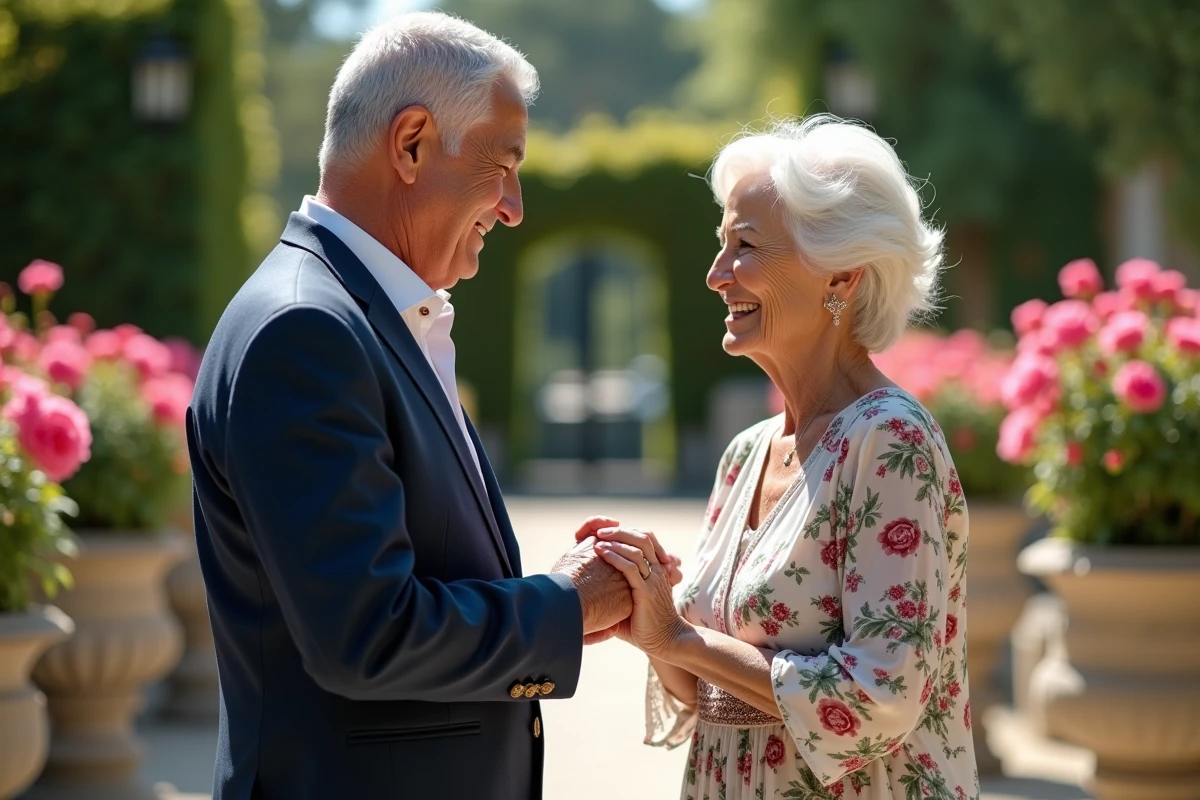
Late marriage at 70 refers to a civil union contracted at an age where both spouses have generally already experienced one or more marital, familial, and financial paths. In France, remarriages after 65 have seen a notable increase since the mid-2010s, driven by both widowhood and late divorces. This trend increasingly involves women over 65, who have historically been few in number to remarry.
Marital regime after 70: what the separation of property changes
The choice of marital regime takes on a particular dimension at 70. Assets are already established, inheritances may have been opened, and children from previous unions play a central role in the consideration.
The separation of property is the regime most frequently recommended by notaries for late marriages. Each spouse retains ownership of their pre-existing assets and those acquired during the marriage. This compartmentalization protects the heirs on each side.
Understanding the advantages of late marriage at 70 also requires measuring the legal constraints. The marriage contract, signed before a notary prior to the ceremony, allows for tailored clauses: limited donation to the surviving spouse to usufruct, exclusion of certain assets from the common estate, or a clause of precipt on the marital home.
Without a contract, the legal regime of community reduced to acquisitions applies by default. Any asset acquired after the marriage then belongs to both spouses, which can create inheritance conflicts with their respective children.

Mental and physical health: the measured effects of marriage after 70
Gerontology studies reported by National Geographic establish a link between late marital commitment and a reduction in feelings of loneliness and depressive symptoms among those over 70. This correlation persists even when the union begins very late in life.
Life satisfaction increases compared to individuals living alone or maintaining a relationship without formal commitment plans. The framework of marriage seems to function as a social anchor that structures daily life.
Physical health and adherence to treatments
The presence of a spouse after 70 is associated with several favorable physical health indicators:
- Better adherence to medical treatments, with the spouse playing a role in reminders and vigilance on a daily basis
- Increased social activity, which limits the risk of functional decline related to isolation
- Cardiovascular benefits and better longevity, documented even in cases of marriage contracted at an advanced age
These findings do not mean that marriage cures. They indicate that living together after 70 reduces certain risk factors related to isolation, a major public health issue among seniors.
Inheritance and life insurance: pitfalls to anticipate before the ceremony
Marriage profoundly alters the inheritance landscape. The surviving spouse benefits from a total exemption from inheritance tax, regardless of the amount transferred. For a couple aged 70 with real estate assets, this tax advantage can represent significant savings compared to a simple donation between partners.
Life insurance and beneficiary clause
Life insurance contracts taken out after 70 are subject to a distinct tax regime. Premiums paid after this age benefit from a global allowance, but beyond this threshold, they reintegrate into the estate and are subject to taxes. Designating the new spouse as the beneficiary of a life insurance contract requires checking consistency with the rights of the reserved heirs.
A technical point often overlooked: the beneficiary clause must be updated after marriage. An old contract designating “my spouse” will automatically benefit the new spouse, which may surprise the children from a previous union if the discussion has not taken place beforehand.
Blended family after 70: setting the framework with children
The main source of tension in a late marriage does not come from the couple themselves, but from the family periphery. Adult children, sometimes grandparents themselves, may perceive this union as a threat to their inheritance or as a lack of loyalty to the deceased parent.
Addressing the subject prior to the ceremony, with transparency about the financial arrangements made, defuses most conflicts. A meeting with the notary to which the children are invited (with the agreement of both future spouses) allows for clear terms to be established.
- Specify the chosen marital regime and its consequences on inheritance
- Present any donations already made or planned
- Clarify the fate of the home in the event of the death of one of the spouses
- Distinguish between personal assets and those that could enter into the community
This approach does not guarantee the agreement of all children. It establishes a readable legal framework that limits contentious recourse after a death.
Daily life and couple’s project at 70
Marrying at 70 involves two people who each have several decades of established habits. Cohabitation requires concrete adjustments: sleep rhythms, diet, relationship to personal space, management of separate social activities.
The emotional maturity gained over the years is a real asset. Couples who marry late often describe a chosen commitment, free from social or familial pressures that weigh on younger unions. Marriage becomes a voluntary act, taken after thorough reflection on what each expects from life together.
Late marriage at 70 remains a legal act with specific patrimonial, fiscal, and familial consequences. The emotional dimension, well documented by gerontology research, is accompanied by technical steps that deserve to be anticipated before the ceremony, not after.